
















































Setup: A Positional Debate With Real Tactical Stakes
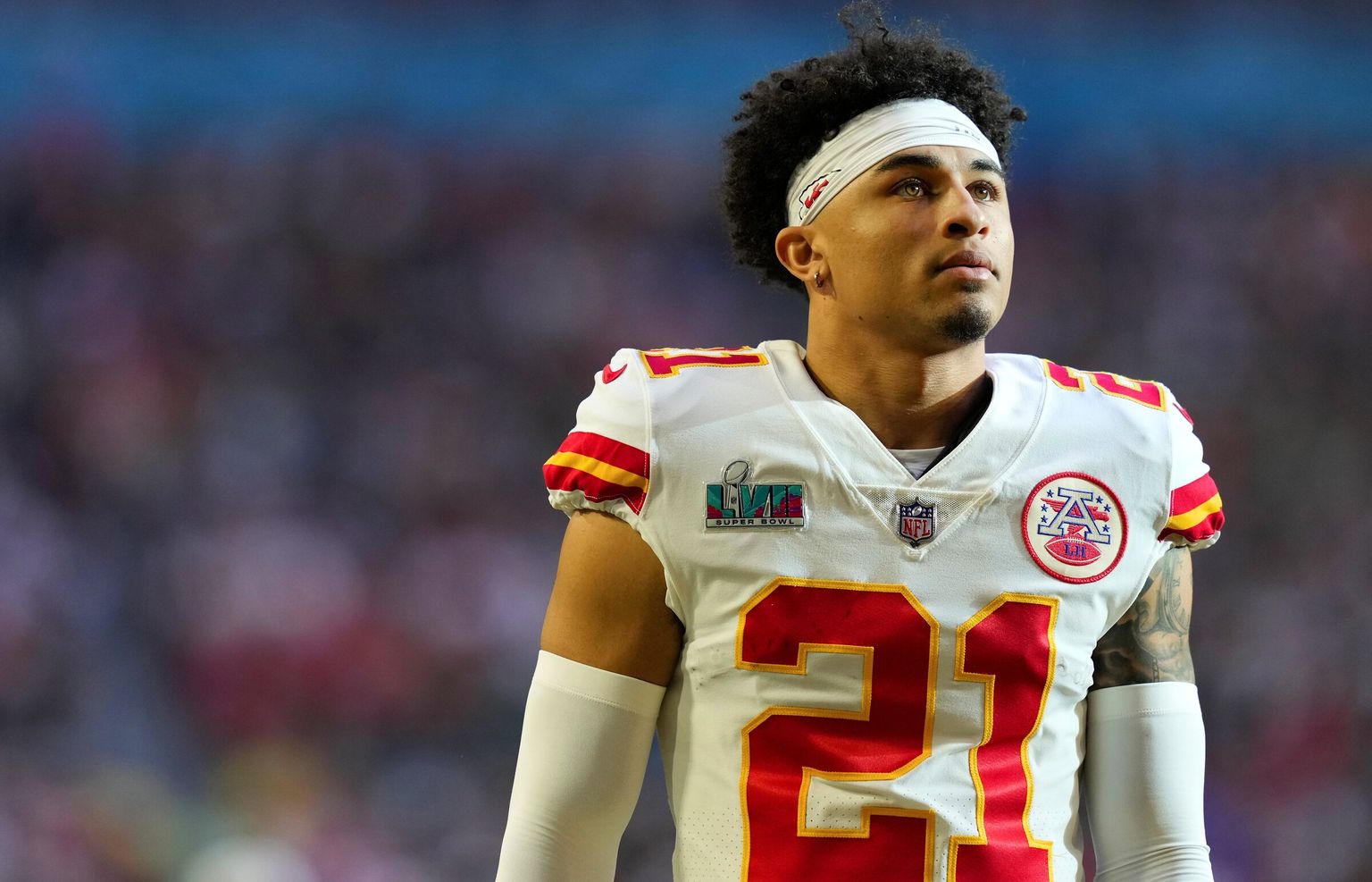
The offseason move that sent Trent McDuffie to the Los Angeles Rams was already one of the most discussed transactions of the spring. But the conversation has shifted from the trade itself to something more nuanced and arguably more important: where exactly does McDuffie play in his new defensive system?
ESPN analyst Mina Kimes has publicly argued that McDuffie's optimal position is on the inside — as a slot cornerback rather than a boundary corner. It's a take that deserves serious tactical unpacking, because the answer has cascading consequences for how the Rams construct their entire secondary.
McDuffie built his reputation as a boundary corner, a player capable of locking down wide receivers on the perimeter in press-man coverage. His compact frame, elite short-area quickness, and instinctive anticipation made him a standout in that role. But those same traits — particularly his ability to mirror route runners in tight spaces and his comfort reading quarterback eyes — translate exceptionally well to the slot, where the game is faster, angles are sharper, and cognitive processing matters as much as pure athleticism.
Key Battles: Inside vs. Outside — What the Position Actually Demands
The slot cornerback role in today's NFL is one of the most demanding on the field. Unlike boundary corners who can use the sideline as an extra defender, slot corners must handle threats from multiple alignments: inside releases, crossing routes, running backs out of the backfield, and tight ends in the seam.
What makes the Kimes argument compelling is the structural reality of modern offenses. The proliferation of 11 personnel (three wide receivers, one tight end, one running back) means the slot receiver is often the most targeted player on the field. Teams increasingly deploy their most dangerous weapons in the slot — think of how many elite offenses use that interior space to create mismatches.
If McDuffie slides inside, the Rams gain a technically refined, instinct-driven defender at the position most likely to be attacked. His processing speed — the ability to diagnose route combinations before they develop — is arguably more valuable in the slot than on the boundary, where raw length and recovery speed carry more weight.
On the boundary, the Rams would then need to deploy a corner comfortable with more isolated, one-on-one assignments with less help from the sideline. That's a different skill set, and how Los Angeles fills that void will be equally critical to their defensive identity.
Turning Point: Why Scheme Context Changes Everything
The debate cannot be resolved without understanding the Rams' defensive framework. Los Angeles has historically favored a system that emphasizes disguised coverages, with defensive backs asked to rotate between zone and man responsibilities depending on pre-snap reads. In that kind of scheme, a player with McDuffie's football IQ is genuinely more dangerous when positioned centrally, where he can influence multiple zones and serve as a communication anchor for the secondary.
A boundary corner in a disguised coverage system can be somewhat isolated from the broader defensive conversation. A slot corner, by contrast, is at the intersection of every coverage call — he must communicate with linebackers, safeties, and the boundary corners simultaneously. McDuffie's profile fits that hub role almost perfectly.
The counterargument is continuity. McDuffie has spent his NFL career developing boundary-corner habits — his leverage techniques, his press-release timing, his off-coverage positioning. Retraining those instincts for the slot is not a trivial ask, even for a player of his caliber.
Takeaways: A Decision That Shapes the Rams' Ceiling
Where the Rams ultimately deploy McDuffie will signal their broader defensive philosophy for the coming season. Placing him inside is the higher-upside, higher-risk decision — it maximizes his cognitive gifts but demands adaptation. Keeping him outside is the safer, more conventional choice, but it may leave value on the table.
From a pure tactical standpoint, the inside argument holds merit. The slot is where games are increasingly won and lost in the modern NFL, and McDuffie's skill set maps onto that position in compelling ways. The Rams' coaching staff will need to weigh developmental timeline against competitive urgency — and that decision alone could define their defensive ceiling in 2026.
Article Stats
72
Trend Score
6
Views
NFL