
















































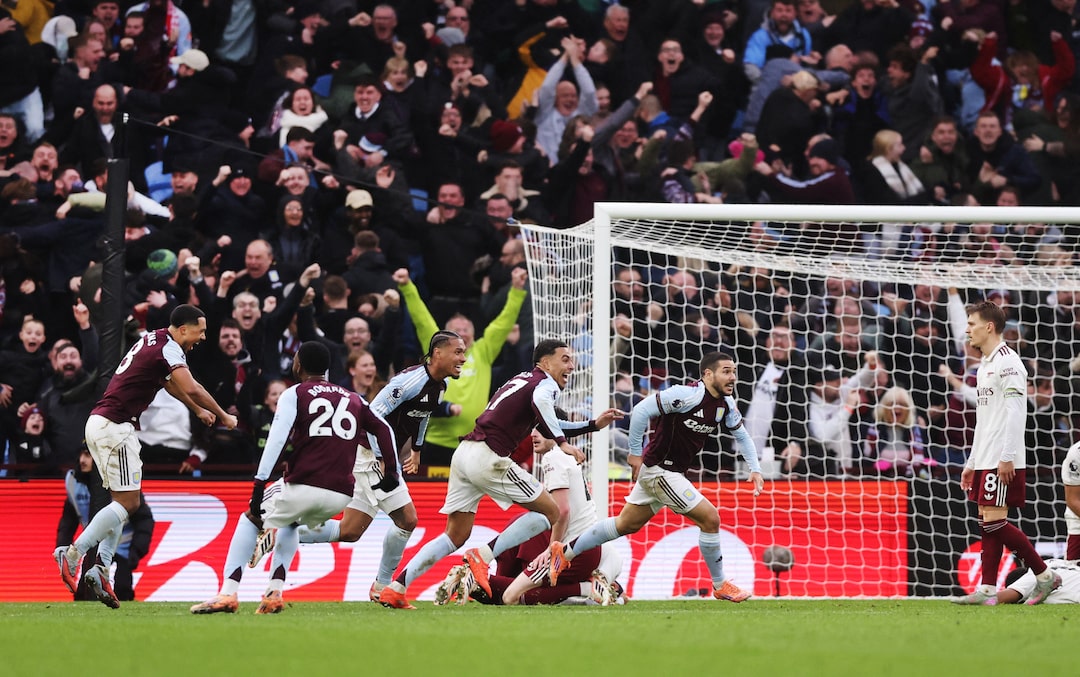
Crisis Deepens: Liverpool Crumble at Villa Park as Three Straight Losses Signal a Season in Freefall
This was not a close game that went the wrong way. This was a controlled dismantling. Aston Villa beat Liverpool 4-2 at Villa Park on Thursday evening, handing Arne Slot's side their third defeat in four Premier League matches and raising urgent questions about where this team is headed as the season enters its final stretch. The scoreline tells one story; the manner of the collapse tells another, darker one.
 Aston Villa
 Liverpool
Liverpool came into this match off the back of a draw against Chelsea and a 3-2 loss at Manchester United — a run that had already stripped the gloss off what had once looked like a promising campaign. A trip to Villa Park offered no comfort. Unai Emery's side were sharp, aggressive, and ruthless in transition, exposing defensive frailties that have now become a recurring theme in Liverpool's recent form. When the final whistle blew, Villa had scored four goals for the second time in five matches, and Liverpool were left with nothing but two consolation headers from Virgil van Dijk to show for their evening.
The immediate consequences are severe. Three losses in four league games represent Liverpool's worst run of form this season. Whatever ambitions they held heading into May — top-four security, a strong finish, momentum — this result chips away at all of them. Villa, meanwhile, look revitalized at home and are building their own case for a strong end to the season.
How It Unfolded
For the majority of the first half, this looked like a tense, cautious game that neither side was willing to fully open up. Liverpool defended in a compact shape and Villa probed without real menace — until the 39th minute, when Matty Cash picked up a yellow card that suggested the home side were feeling frustrated. Two minutes later, that frustration evaporated.
In the 42nd minute, Morgan Rogers broke the deadlock, converting with an assist from Lucas Digne to send Villa into the break with a 1-0 lead. It was a sucker punch — late in the half, against the run of nothing in particular, and yet entirely symptomatic of Liverpool's inability to kill off dangerous moments before they become goals. Ollie Watkins also collected a yellow card on the stroke of halftime, but the caution did nothing to dampen his threat.
Liverpool responded with intent after the restart. In the 52nd minute, Virgil van Dijk pulled Liverpool level, heading home from a Dominik Szoboszlai delivery to make it 1-1. For approximately five minutes, it looked like the Reds might be able to reset and control the contest. They could not. In the 57th minute, Ollie Watkins restored Villa's lead, converting a Rogers assist to make it 2-1 — and Rogers, the scorer moments earlier, was now the creator. The roles reversed, the damage doubled.
From that point, Liverpool fell apart structurally. Joe Gomez was booked in the 62nd minute as Liverpool grew increasingly desperate and ragged in their attempts to claw back into the match. John McGinn was carded in the 66th minute for Villa — evidence of how physical and competitive the midfield battle had become — but it was Villa who maintained their composure. Watkins scored his second of the evening in the 73rd minute, a goal that effectively ended the contest at 3-1 and rendered Liverpool's task almost impossible.
With the game gone, Van Dijk converted another Szoboszlai assist in the 90th minute to make it 4-2 — a cosmetic improvement that arrived too late and meant too little. McGinn had already added Villa's fourth in the 89th minute, assisted by Watkins, who capped a dominant personal display by setting up a goal after scoring two. Liverpool's defensive line had been beaten four times, and their attacking output amounted to two set-piece headers from their center-back.
What Went Wrong
The most damaging phase of this match was the five-minute window between the 52nd and 57th minutes. Liverpool equalized and then immediately conceded again — a failure of game management so glaring that it undermined everything the team had worked toward in the first half. When you've just pulled level, the instinct should be to consolidate, to let the momentum settle. Liverpool did the opposite, and Villa punished them immediately.
Tactically, Liverpool looked vulnerable every time Villa played in behind the defensive line. Watkins is one of the most relentless runners in the league, and Liverpool offered him space to exploit on both of his goals. The first came off a Rogers assist; the second was entirely self-generated. Neither goal felt like a fluke — both felt like the result of a defensive structure that wasn't organized to contain Villa's specific threats.
The broader pattern is troubling. In their last four matches — losses to Manchester United and Villa, sandwiched around a draw with Chelsea — Liverpool have conceded ten goals. Their recent form table shows wins against Crystal Palace and Everton in late April, but since then, the defensive solidity that underpinned those victories has evaporated. This isn't a one-off bad night. This is a team that has stopped functioning as a cohesive defensive unit under pressure, and the midfield has not done enough to protect the back line in any of these defeats.
Joe Gomez's yellow card in the 62nd minute was emblematic of Liverpool's second-half struggles — reactive, late into challenges, and already a step behind the tempo Villa were setting. When a team is reduced to fouling to stop attacks rather than winning the ball cleanly, the tactical battle has already been lost.
Bright Spots
Aston Villa deserve significant credit here. Unai Emery's side showed exactly the kind of structural intelligence that makes them dangerous at home. Morgan Rogers was outstanding — he both scored and created, acting as the central thread in Villa's attacking play. His goal in the 42nd minute and his assist for Watkins in the 57th minute were the two moments that defined the match. Ollie Watkins, meanwhile, delivered a complete striker's performance: two goals, one assist, and a relentless work rate that gave Liverpool's center-backs no rest. McGinn's late goal capped a collective team effort that was hard to fault.
For Liverpool, the only genuine positive was Virgil van Dijk's brace — both goals finished with authority from Szoboszlai deliveries. It's a minor footnote given the context, but the van Dijk-Szoboszlai combination showed that Liverpool retain at least one functioning set-piece mechanism. In a match where so much went wrong, that's a thin thread to hold onto, but it exists.
The Fallout
This defeat leaves Liverpool in a damaging position as the season approaches its conclusion. Three losses in their last four league games — conceding 11 goals across those three defeats alone — represent a form collapse at the worst possible time. The gap between Liverpool's aspirations and their current output is now measurable and significant.
Aston Villa, by contrast, are trending upward at home. Their last five results show a team capable of both high-scoring victories and frustrating draws, but when they're on song at Villa Park, they are a legitimately dangerous side. Liverpool found that out in the hardest way possible, and the head-to-head record now reads: one win each in the last two meetings, with Villa's victory being far more emphatic.
For Liverpool, the fixture list and the table will now demand honesty. Every point dropped in the remaining games carries consequences for their final league position, European qualification, and the narrative heading into next season. A side that loses three of four in May does not have the right to call its campaign a success, regardless of what came before.
One final note: BilSports' pre-match prediction of Over 1.5 goals — rated at 76% probability with an edge of +17.2 percentage points — was correct. Six goals were scored. The model identified the match's attacking potential accurately, even if the distribution of those goals was entirely one-sided.