The Context
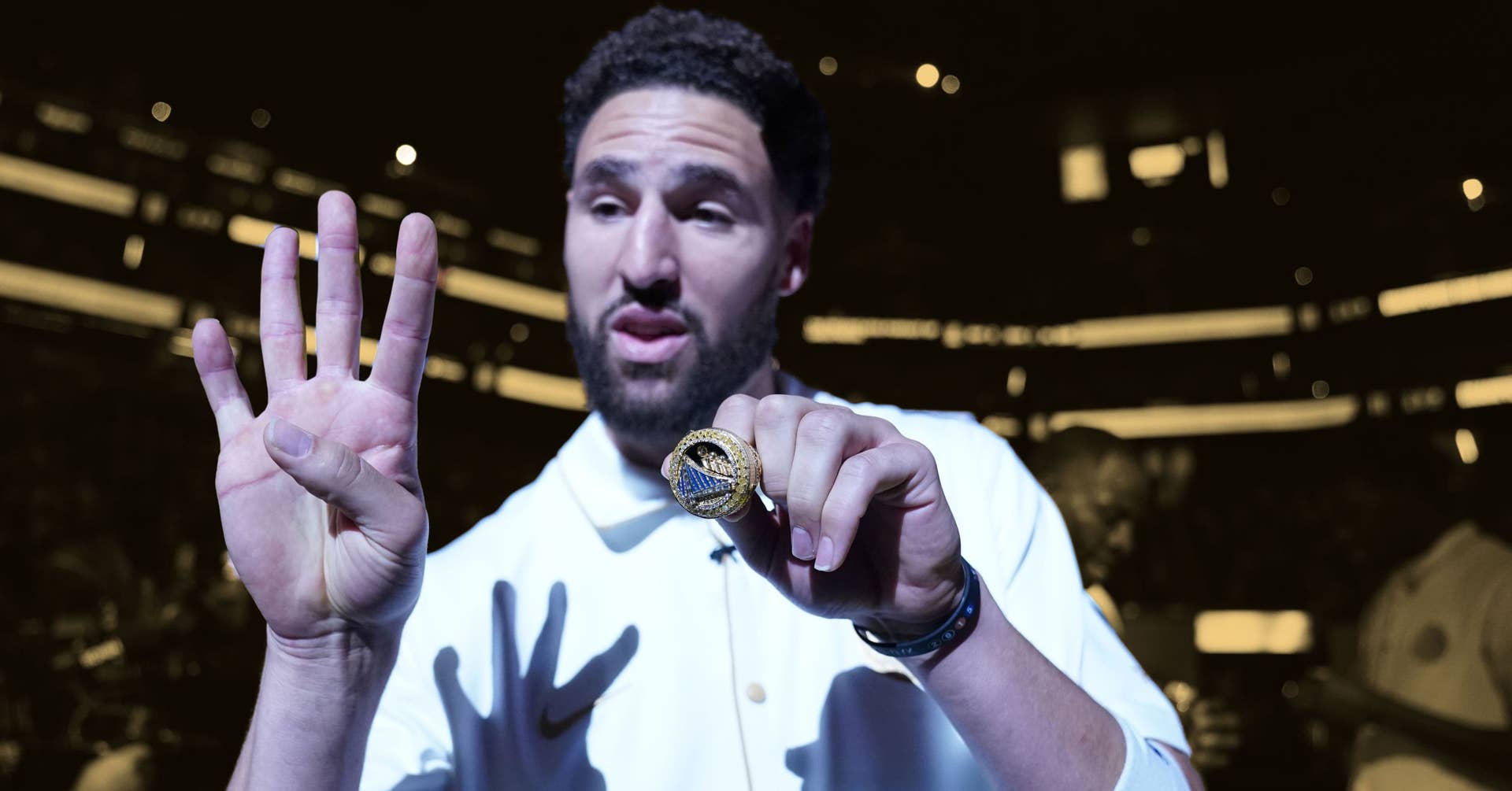
There is a particular kind of athlete who becomes so synonymous with a team, a city, and an era that separating the person from the legend feels almost impossible. Klay Thompson was, for the better part of a decade, the embodiment of that rare phenomenon. Alongside Stephen Curry, he helped construct one of the most dominant dynasties in NBA history — a Golden State Warriors machine that won four championships between 2015 and 2022 and fundamentally rewired how the world thought about basketball.
But dynasties are not permanent. They fracture, fade, and eventually dissolve — sometimes on the court, sometimes off it. In April 2026, Thompson found himself at the center of a very different kind of story: a public split from Grammy-winning artist Megan Thee Stallion, who took to social media to announce the end of their relationship and accuse him of infidelity. The couple had only made their romance officially public at a red carpet event in July 2025. The internet, predictably, erupted.
It is a tabloid moment, yes. But it is also a mirror — reflecting back on a career arc that has been defined as much by what was lost as by what was won.
---
The Moment
To understand Thompson's place in basketball history, you have to go back to the night of June 13, 2019. Game 6 of the NBA Finals. The Warriors, already depleted by injuries to Kevin Durant, were facing the Toronto Raptors in what would become one of the most emotionally chaotic nights in recent Finals memory.
Thompson, playing through a hamstring injury that had limited him in the series, tore his ACL in the second half. He walked off the court under his own power, drained two free throws — a moment of almost surreal athletic composure — and then disappeared into the tunnel. Golden State lost the championship that night. It was the end of an era, though nobody quite knew it yet.
What followed was a two-year absence that tested Thompson's identity as a player. He returned in January 2022, only to suffer an Achilles tear that had already cost him the entire 2020-21 season. Two catastrophic injuries in three years. By the time he came back healthy, the Warriors had already won their fourth title in 2022 without him playing a meaningful role in the postseason run.
The dynasty had moved on, even if Thompson had not.
His departure from Golden State after the 2023-24 season — a stunning development given how deeply he was woven into the franchise's identity — marked the symbolic close of the Warriors' golden chapter. He signed with the Dallas Mavericks in the summer of 2024, a move that felt less like a fresh start and more like a complicated goodbye.
---
The Legacy
Historically, the Warriors dynasty of the 2010s will be studied the way scholars examine the Chicago Bulls of the 1990s or the Los Angeles Lakers of the Showtime era. The numbers are staggering: five Finals appearances in a row from 2015 to 2019, four championships, and a style of play — pace, space, and the three-point revolution — that permanently altered the sport's DNA.
Thompson's individual contributions to that legacy are often undervalued in the broader conversation, which tends to orbit around Curry's historic shooting or Durant's brief but explosive partnership. But consider the record books: on November 4, 2016, Thompson scored 60 points in just 29 minutes against the Indiana Pacers, taking only 11 dribbles the entire game. It remains one of the most efficient scoring performances in NBA history. Earlier that same year, in Game 6 of the 2016 Western Conference Finals against the Oklahoma City Thunder, he erupted for 41 points — including 11 three-pointers — to single-handedly drag Golden State back from a 3-1 series deficit.
These were not supporting-cast moments. These were the performances of a franchise cornerstone.
And yet, the narrative around Thompson has always been complicated by timing and circumstance. The injuries arrived at the precise moment when his legacy should have been cementing itself. The departure from Golden State, followed by an underwhelming stint in Dallas, and now the very public personal turbulence of 2026 — it all adds a layer of melancholy to what should be a straightforward Hall of Fame story.
There is a broader pattern here that NBA history knows well. Great players who are inseparable from a dynasty often struggle to define themselves once that dynasty ends. Scottie Pippen spent years in the shadow of Michael Jordan. Pau Gasol never quite recaptured the magic of his Lakers years after the dynasty dissolved. The institution moves on; the individual is left to reckon with what remains.
For Thompson, the reckoning appears to be happening in real time — and not just on the basketball court.
---
Past Meets Present
The 2026 NBA landscape is a fascinating study in transition. A new generation of stars is asserting itself, and the franchises that dominated the previous decade are rebuilding or reimagining their identities. Golden State, once the sport's gold standard, is in the middle of a significant roster overhaul. Dallas is navigating its own post-Luka Dončić reality.
Thompson, at 35, sits at the intersection of two eras — old enough to be a living monument to one of the sport's greatest dynasties, young enough that his story is not yet fully written.
What the tabloid noise of April 2026 cannot erase is the substance of what he built between 2011 and 2019. Four championship rings. Two All-Star Game MVP awards. A Defensive All-Star selection. And a shooting stroke so pure that coaches still use his mechanics as a teaching model for the next generation of guards.
Dynasties end. Legacies, properly understood, do not. The Warriors' run was one of the most thrilling chapters in NBA history, and Thompson was not a footnote — he was a co-author.
The headlines of today will fade. The banners hanging in San Francisco will not.
Article Stats
32
Trend Score
2
Views
Basketball